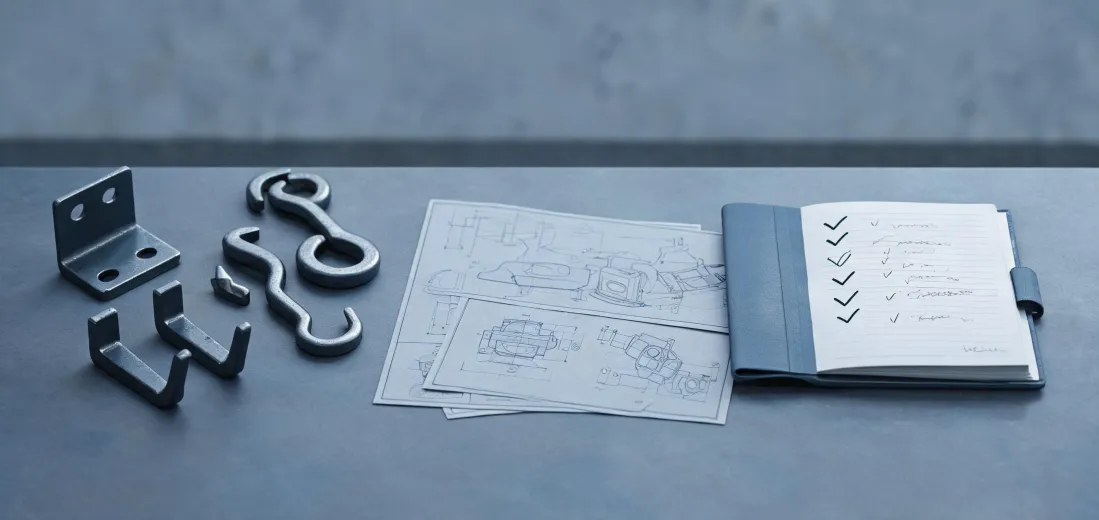
There's No Single Right Answer Here
If you're searching for Gunnebo lifting hardware, you're probably making a real purchasing decision—not just browsing. I get that. I'm a procurement manager at a 200-person industrial supply company. I've managed our capital equipment budget (roughly $340,000 annually) for six years, negotiated with 40+ vendors, and logged every order in our cost tracking system.
Here's what I've learned: most people asking "should I buy Gunnebo?" are asking the wrong question. The real question is: what type of buyer are you?
Because the answer changes completely depending on your scenario.
Scenario A: Safety-Critical, High-Frequency Lifting
You probably need Gunnebo—and here's the math
If you're lifting people, expensive payloads, or operating in offshore/marine environments, the premium on Gunnebo rigging is justified. Not because of marketing—because of the TCO calculation.
In Q2 2023, I compared three shackle suppliers for a marine client project. Vendor A (a generic import brand): $42/unit. Vendor B (Gunnebo): $68/unit. That's a 62% difference. Eye-catching, right?
But we factored in: certification documentation handling time, traceability gaps, and the cost of a single audit failure. Vendor A didn't have batch-level traceability. For a safety-critical application, that's not a discount—it's a liability.
We went with Gunnebo. The paperwork alone saved our compliance team roughly 14 hours per quarter. At our internal rate, that's about $840 annually. The shackle premium across our order volume was $1,300/year. Net cost: around $460. Worth it? For safety-critical, absolutely.
Scenario B: Standard Industrial Use—Where the Math Gets Interesting
The counterintuitive part
Everything I'd read about lifting hardware said to always go premium. In practice, for our standard warehouse operations, that wasn't true.
Our warehouse team does regular lifts under 3 tons, controlled environment, predictable load profiles. We switched two product lines from Gunnebo to a mid-tier certified brand in early 2024. Saved roughly $6,200 annually—about 31% on those line items. Performance? Basically identical over 18 months of tracking.
The difference that actually mattered: documentation response time. The mid-tier vendor takes 2–3 days to send cert docs. Gunnebo sends them same-day. When we're assembling a client audit package, that delay costs us.
The conventional wisdom is "you get what you pay for." My experience with 500+ lifting hardware orders suggests that's only true when the application actually demands the premium spec.
If your lifts are standard, your environment is controlled, and your audit requirements are flexible on timing—the mid-tier option is usually the better TCO play.
Scenario C: Mixed Equipment Procurement—Know the Boundaries
Why you shouldn't buy everything from one vendor
This is where I see the most expensive mistakes happen.
I've tried consolidated purchasing before. Asked our rigging supplier to quote us on power tools. They did. Quoted a GMH04PLX 80V Max XGT breaker hammer kit at 18% above what a tool specialist charges. They weren't stocking it—just brokering it through. Same story when someone on our facilities team asked about adding a towel hook to a hardware order. Eleven-week lead time. For a towel hook.
There's a question people sometimes debate: is a spade a garden tool? Sounds like a taxonomy argument, but it's actually a procurement question. If you're unsure which category your item fits in, you're probably not buying it from the right specialist.
The vendor who said "that's not our strength—here's who does it better" earned my trust for everything else. A rigging specialist knows shackles, hooks, swivels, master links. They don't know breaker hammers. They shouldn't pretend to.
That's the boundary test: if your supplier can't explain the specific engineering difference between two product variants in their catalog, they're a reseller, not a specialist.
How to Figure Out Which Scenario You're In
Ask yourself three questions:
- What's the failure consequence? If a part failure means injury, regulatory fine, or shutdown—you're in Scenario A. Buy the best.
- What's your annual volume in this category? If it's under $10K/year and standard-duty, you're probably in Scenario B. Mid-tier is fine.
- Can your supplier explain their product line's technical distinctions? If not, you're in Scenario C—and you need a specialist, not a generalist.
Looking back, I should have run this framework three years earlier. We wasted probably $4,000–5,000 on premium hardware for applications that didn't need it. Nobody got hurt. But the budget could've gone elsewhere.
Gunnebo products are excellent—when the scenario calls for them. The trick isn't finding the "best" brand. It's matching the brand to your actual risk profile and volume.