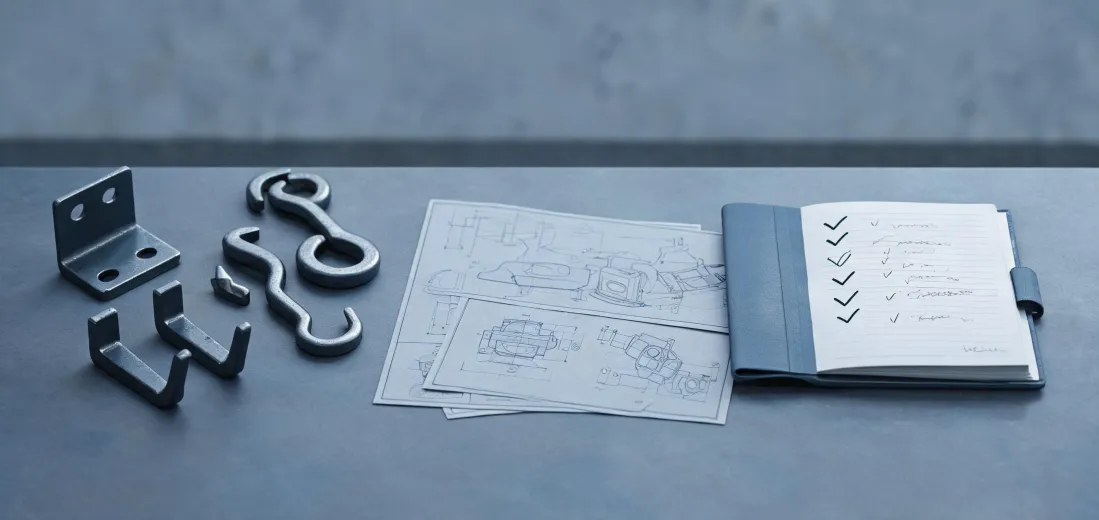
The request that made me stop treating every purchase the same
I'm an office administrator for a 180-person industrial services company. I manage MRO and tooling ordering—roughly $220K annually across 12 vendors. I report to operations and finance. When I took over purchasing in 2020, I thought my job was simple: get three quotes, pick the best one, keep the spreadsheet clean.
Then came the email. Our maintenance lead needed a pressure washer pump rebuild kit for a machine that, as far as I knew, we'd sold two years earlier. Another supervisor wanted a Dremel HSES-01 electric screwdriver kit for control panel work. And someone in the shop asked, can a impact driver remove lug nuts?—like I was supposed to know. Meanwhile, operations needed swivel hooks and shackles from the Gunnebo catalog. I typed gunnebo into Google and got Gunnebo House and Gardens, a historic estate in Sweden. For a second, I almost forwarded a tourism page to our lifting crew. (Not my finest moment.)
The deeper problem isn't search—it's category drift
The surface issue looked like bad search results. But the real problem was category drift: we'd let every department dump unrelated needs into one purchasing inbox. Lifting hardware, maintenance tools, office equipment, and random repair questions all became 'orders.'
Here's what I missed: a Gunnebo lifting hook and a Dremel screwdriver kit don't belong in the same risk category. One is safety-critical rigging hardware. The other is a hand tool for light assembly. If I treat them the same, I'll either overpay for the simple stuff or under-verify the critical stuff.
When I compared our lifting hardware requests and our office tool requests side by side—same form, same approval path—I finally understood why the details matter so much. The lifting items had load ratings, certifications, and traceability requirements. The Dremel kit had voltage, battery platform, and chuck size. The pressure washer pump rebuild kit needed a pump model and serial number. I was asking all three for the same information: 'What's the part number?'
I also made a classic assumption: I assumed every result for gunnebo was the same company. Didn't verify. Turned out Gunnebo House and Gardens is a destination, not a supplier of lifting components. That mistake was harmless that day, but it showed me how easily a purchase order can go sideways.
And the impact driver question? That's not a purchasing question. It's a maintenance procedure question. An impact driver might loosen a lug nut, but using one for final torque can over-torque, strip threads, or damage the wheel stud. If we're talking about a vehicle that goes on the road, the answer needs a torque wrench and the manufacturer's spec—not an admin's guess.
What this confusion actually costs
Let's talk money, because finance doesn't care about my search frustration.
Wrong orders are expensive in a boring, repetitive way. In 2022, I found a great price from a new vendor—$1,800 cheaper than our regular supplier on a bulk order of general maintenance parts. I assumed 'same specifications' meant identical results. Didn't verify. They couldn't provide a proper invoice—handwritten receipt only. Finance rejected the expense report. I ate the cost out of the department budget. Now I verify invoicing capability before placing any order.
A wrong pressure washer pump rebuild kit can be an $80–$150 mistake, plus return shipping (based on quotes I collected in January 2025). If it's rushed, add 50% or more. A wrong Dremel HSES-01 electric screwdriver kit might be $60–$120 wasted, plus the time your tech spends waiting. Those numbers aren't huge, but they add up across 70–80 orders a year.
The bigger cost is trust. When a repair is delayed because I ordered the wrong kit, the maintenance supervisor tells his manager. When a lifting job waits because I couldn't find the right Gunnebo catalog page, operations notices. And when I ask a supplier, 'Does this shackle fit our application?' and they say, 'Sure, it fits everything,' that's a red flag.
According to FTC advertising guidelines, claims must be truthful and not misleading, and must be substantiated with evidence. Source: ftc.gov.
That matters for purchasing. If a supplier claims a part is 'universal' or 'drop-in ready,' I need documentation—not a shrug. For lifting hardware, I need the load rating and certification. For a pump rebuild kit, I need the exact pump model. For a Dremel kit, I need the battery platform. 'Fits everything' usually means 'fits nothing well.'
The real cost, though, is safety. A Gunnebo hook or shackle used in the wrong application isn't a returns issue. It's an incident waiting to happen. I'm not a rigging engineer. I shouldn't pretend to be one. My job is to route the request to someone who can verify the spec—and then buy exactly what they approve.
How I changed the process
I didn't fix this with a fancy software rollout. I fixed it with four categories and a few hard rules.
- Lifting and rigging: Anything from a Gunnebo catalog—hooks, shackles, swivel hooks, container lifting lugs—goes to our lift supervisor first. I don't quote it until the application is confirmed.
- Maintenance and repair: Pump rebuild kits, belts, filters, and similar parts require a machine model and serial number. No model, no order.
- Tools and assembly: A Dremel HSES-01 electric screwdriver kit or similar tool needs the battery platform, voltage, and accessory list. I check whether we already own compatible batteries.
- Procedure questions: If someone asks, can a impact driver remove lug nuts?, I forward it to the shop lead. I don't answer it. Purchasing isn't the place for torque specs.
I also separate Gunnebo the lifting brand from Gunnebo House and Gardens the tourist destination in my own bookmarks. It sounds silly, but it's saved me from sending the wrong link more than once. If you've ever searched a brand name and gotten a museum, you know the feeling.
The results weren't dramatic, but they were real. Wrong orders dropped. My average order processing time went from about 18 minutes to 11 minutes because I wasn't chasing missing specs. And finance stopped flagging my expense reports (which, honestly, felt better than any thank-you email). It saved us a ton of time, and it kept the critical lifting requests away from the general tool requests.
The fundamentals haven't changed
What was best practice in 2020 may not apply in 2025. Five years ago, I could get away with a shared inbox and a folder of PDFs. Now suppliers change part numbers, catalogs move online, and search engines mix up brands with historic estates. The execution has transformed.
But the fundamentals are the same: verify the application, verify the source, verify the invoice. Respect the old rules—especially for lifting hardware. Just don't use old tools to manage new complexity. That's the lesson I keep on a sticky note above my monitor.