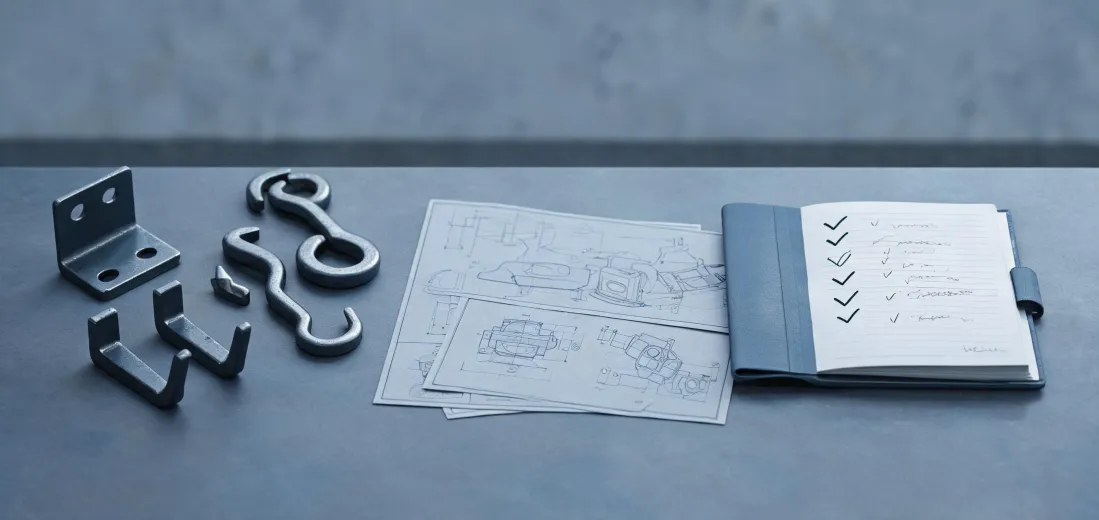
The short version
The purchase that gets you in trouble isn't the expensive one — it's the one that's technically wrong for the job. A $40 weed burner nobody can safely refill, a garden tool set that snaps on the first rocky bed, a lifting hook rated for the wrong load. The price gap between "good enough" and "wrong" is usually 15–20%. The cost of wrong is a safety incident, a rejected invoice, or a re-order three weeks later.
So before I sign off on anything — lifting hooks, groundskeeping tools, shop kits — I run the same four checks. Below is what they are, why they exist, and where they stop working.
Why you should trust this at all
I'm the office administrator for a 220-person company. I manage purchasing across roughly 8 vendors and process 60–80 orders a year — about $180,000 annually, spread across facilities, maintenance, and a small warehouse crew. I report to both operations and finance, which means I get hit from two directions whenever something comes back wrong.
When I took over purchasing in 2020, I assumed the hard part was negotiating price. It wasn't. The hard part is that nobody tells you the difference between a load-rated hook and a hardware-store hook until something goes wrong.
In our 2024 vendor consolidation, I moved three categories (rigging hardware, grounds tools, compressed-air kits) onto fewer suppliers. That project taught me more than the previous three years combined.
1. Lifting hooks and shackles — read the stamp, not the logo
If you've ever typed "gunnebo" into a search bar, you already know the name shows up in every rigging conversation. Gunnebo hooks and shackles are Swedish-made lifting components, and the gunnebo logo is one of the marks buyers learn to recognize once they start checking for traceability. But here's the trap: a logo is not a rating.
A genuine lifting hook has a working load limit (WLL) stamped or tagged on it. No stamp, no use for anything overhead. That's not brand loyalty — it's just how rated hardware works. A standard 3/4-ton swivel hook and a 5-ton swivel hook can look almost identical at arm's length (they absolutely do not look identical up close, but people order by photo).
What I actually verify before ordering:
- The WLL matches the heaviest load the team will lift, with margin — not the average load.
- The hook type matches the rigging (safety hook vs. eye hook vs. swivel) — mismatched geometry is a common silent failure.
- Documentation exists. A supplier who can't send a spec sheet or certificate is a supplier I don't use again.
Quick reality check: I've only worked with domestic vendors and mid-volume orders. I can't speak to how these checks scale for offshore procurement or for classified lifting environments, where the rules are stricter than anything I deal with.
2. Garden and grounds tools — the "set" problem
The ergo garden tool set 3-piece is a good example of a category where bundling helps and hurts at the same time. Bundles save money per tool, but the failure of one tool usually means a repurchase of the whole set — and grounds crews are hard on tools in ways that sales photos never show.
Two things I learned the slow way:
- Check the handle-to-head joint first. That's where cheap sets fail.
- Check whether the bundle's weakest tool is a tool you'd actually use. Half the value of a "3-piece" set disappears if one piece is redundant with what you already own.
On the weed burner question — a weed burner garden tool is a propane torch on a wand, used to kill weeds with heat instead of herbicide. You don't burn the plant; you pass the flame over it for a few seconds, the cell walls rupture, and it dies over the following days. It's a legitimate tool, especially where chemical use is restricted. It's also the tool most likely to be ordered without checking two things: local fire restrictions and whether the person using it has actually been trained. Our first weed burner sat unused for a month because nobody had signed off on refill handling (ugh, another meeting).
3. Air compressor combos — read the CFM, not the tool count
The btfp3kit 3-tool air compressor combo kit is a classic example of a bundle that buyers evaluate by the wrong number. The "3-tool" part is the marketing. The number that actually decides whether this kit is useful is CFM at 90 PSI — cubic feet per minute of air the compressor can deliver while the tools are running.
If the compressor's CFM at 90 PSI is lower than the tools' combined demand, you'll spend your afternoons waiting for the tank to refill. The kit still "works." It just works badly. This is the single most common mismatch I see in maintenance purchases and the reason a decent-looking combo kit ends up as shelf decor.
My checks: match CFM to the hungriest tool, not the average; confirm tank size against duty cycle; confirm the outlet configuration matches what the shop already has.
4. The mistake I keep almost making
Even after choosing a supplier and confirming specs, I still second-guess. On our last compressor order I hit "confirm" and immediately thought: did I check the outlet, or just the price? The three days until the delivery tracking updated were mildly stressful. That's not a real problem — but it's the honest version of what "just order it" feels like from this seat.
There's an old belief that "local always ships faster." That was true a decade ago, before modern logistics closed most of the gap. Today a well-organized remote vendor often beats a disorganized local one on both speed and paperwork. The supplier who can't produce a clean invoice — even locally — is the slow one.
Where this stops working
None of the above applies to purchasing at scale. If you're ordering 500 hooks or negotiating an annual compressor contract, you have a procurement team and the rules are different (and stricter).
It also doesn't apply to environments where the eventual user is unknown. All my checks assume I know who'll use the tool and for what. Hand a rated hook to someone who hasn't been trained and the rating stops mattering.
Finally — and this is the part I wish more suppliers told buyers upfront — education goes both ways. I'd rather spend ten minutes explaining a spec requirement than six weeks cleaning up a mismatched order. An informed customer asks better questions, orders faster, and returns less. That benefits everyone on the invoice.