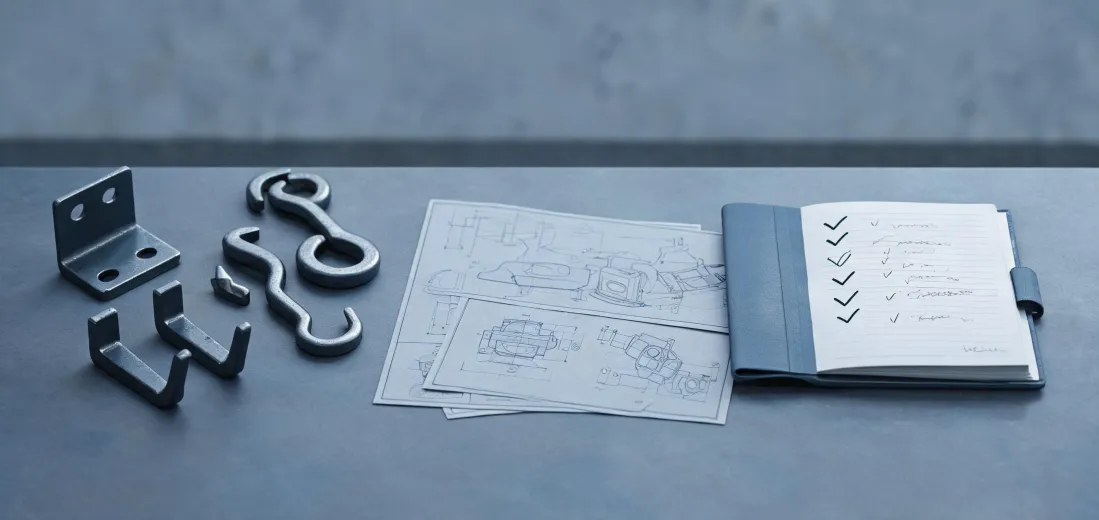
If you're trying to figure out which Gunnebo products your operation actually needs, I'll save you the sales pitch: there's no single right answer. It depends on what you're lifting, how often, and under what conditions.
I've been handling lifting and rigging equipment orders for seven years now. In that time, I've personally made—and documented—11 significant purchasing mistakes, totaling roughly $28,000 in wasted budget. I now maintain our team's procurement checklist so nobody (including me) repeats those errors. This article is that checklist, minus the boring meetings.
One thing I'll say upfront: I believe value beats price in procurement. That's not a slogan. It's a conclusion I reached after watching a $200 savings turn into a $1,500 problem on more than one occasion.
Three Scenarios, Three Different Answers
When someone asks me "which lifting hooks or shackles should we buy?" my first question is always: what does your operation look like? Most buyers I've worked with fall into one of three categories.
- Scenario A: The light workshop — occasional lifting, small loads, general maintenance and repair work.
- Scenario B: The container handler — regular container loading and unloading, logistics-heavy operations.
- Scenario C: The heavy industrial or marine operator — continuous lifting, harsh environments, safety-critical applications.
These three scenarios need different products, different certification levels, and different budgets. Here's each one, including where I screwed up.
Scenario A: The Light Workshop — Buy Simple, Buy Right
If you're a fabrication shop, an agricultural workshop, or a small construction team, you probably need basic safety hooks and shackles more than you need a full rigging suite. The Gunnebo products I'd recommend here are straightforward: standard safety hooks and shackles in common sizes (3/4" and 1" are the ones I see ordered most).
Here's where my advice goes against the grain: don't over-spec. Lifting equipment marketing makes you feel like you always need the most certified, most advanced option. For occasional, low-load lifting, you don't.
My mistake in this category: in 2019, I upsold a client on swivel hooks with premium locking mechanisms that cost 40% more than standard safety hooks. They never used the swivel feature once. $890 wasted, and the client quietly switched buyers the next year. If the load is under 2 tons and lifting happens a few times a week, standard safety hooks are a no-brainer.
One more thing for this scenario: if you're setting up a workspace, don't ignore the hand tools. I spent weeks researching Gunnebo lifting specs and only a few hours on hand tools—and my crew made sure I heard about it. If I could go back, I'd have read ergo hand tool kit reviews more carefully before buying cheap alternatives. Ergonomics matters when your guys use these tools daily. That lesson cost me an "I told you so" from every technician on the team.
Scenario B: The Container Handler — Invest in Lugs, Verify Everything
This is the category where most of my readers probably sit. If you're regularly loading and unloading shipping containers, Gunnebo container lifting lugs are the core of your setup. And I have a painful story here.
In September 2022, I approved a $3,200 order of Gunnebo container lifting lugs. I checked the SWL ratings myself. I verified the working load limits. What I didn't check was whether the lugs matched the corner casting dimensions of the client's specific containers. The result: every single lug had the right rating but the wrong fit. $3,200 worth of container lifting lugs, straight into the "cannot return" pile.
That failure is why our team's pre-check list now includes these four items before any container lifting lug order:
- Exact container corner casting type (ISO 1161 standard vs. proprietary designs)
- Dynamic load factors for the client's specific handling equipment
- Twistlock-style lugs vs. bolt-on lugs — which the operation actually supports
- Certification documentation requirements before delivery, not after
For this scenario, I'd say: invest in quality lugs and double-check the fit. The difference between an $80 lug and a $120 lug is nothing compared to what happens if a lug fails while a container is suspended. And please don't buy generic alternatives just because they're $30 cheaper. In my experience managing roughly 40 container-handling orders, the lowest quote has cost us more in rework and delays about 60% of the time. I don't have hard data on industry-wide defect rates, but based on five years of our own orders, my sense is fitment issues affect 8-12% of first orders when buyers choose the cheapest option.
Scenario C: Heavy Industrial and Marine — Full Traceability, Zero Shortcuts
If you're operating cranes on vessels, working offshore, or handling heavy loads in a shipyard, you're in a different league entirely. Here, I'd recommend the full Gunnebo range: safety hooks, swivel hooks, shackles, links, and container lifting lugs—but all with the right certification paperwork attached.
"This product is certified" gets thrown around a lot. For marine and heavy industrial applications, certification is not one-size-fits-all. You need manufacturers' declarations that match the specific standards for your region and operating environment. I learned this in 2020 when a shipyard rejected an order because test certificates didn't specify exact batch numbers. That rejection cost us a 3-day production delay and a $650 recertification fee (we did find a way to verify the material traceability, thankfully).
Bottom line for this scenario: pay for traceability. If a supplier cannot tell you the exact batch, the material grade, and the test date for each component, that's a red flag. This is one area where I do not compromise.
And here's a tangent that's actually relevant: if you're running a coastal or low-lying facility, water management is part of the job whether you like it or not. A facility manager I know lost $1,400 of inventory to water damage after an old sump pump died overnight. He later installed an M53 sump pump kit and hasn't had a recurrence since. The same question homeowners ask—"does a house need a sump pump?"—applies at industrial scale, just with bigger consequences. We added "check sump pumps" to our facility checklist after a near-miss of our own.
How To Figure Out Which Scenario You're In
Still not sure where you fit? Ask yourself these four questions:
- How often do you lift? Daily or weekly container handling means Scenario B. Occasional maintenance lifting puts you in Scenario A.
- What's the environment? Coastal, offshore, chemical exposure? That's Scenario C territory even if your lifting frequency is low.
- What do your contracts require? If you're supplying certified lifting equipment to external clients, you're at least Scenario B—possibly C.
- What happens if something fails? If a dropped load could injure someone, default to the higher tier. No exceptions.
Even after choosing the wrong option twice, I've second-guessed my own criteria. What if I'm overcomplicating this? What if the cheap route would have worked? Then I remember the 2022 lug order and the 2019 over-spec order, and I stop doubting.
Bottom Line
Here's what I've settled on after seven years:
- Scenario A: standard safety hooks and shackles, and don't pay for features nobody will use.
- Scenario B: certified container lifting lugs, verified for fit before payment.
- Scenario C: full traceability, matching certification, and zero shortcuts.
If a deal seems too cheap to be true, it's not a deal—it's someone else's gamble with your money.
This guidance was accurate as of early 2026, but standards and product lines evolve, so verify current specifications before ordering. The right Gunnebo products are out there for your specific operation. Take the time to figure out your scenario first. A few extra days of verification now saves months of regret later.
And if you've already made the same mistakes I have? Welcome to the club. At least now you know you're in good company.