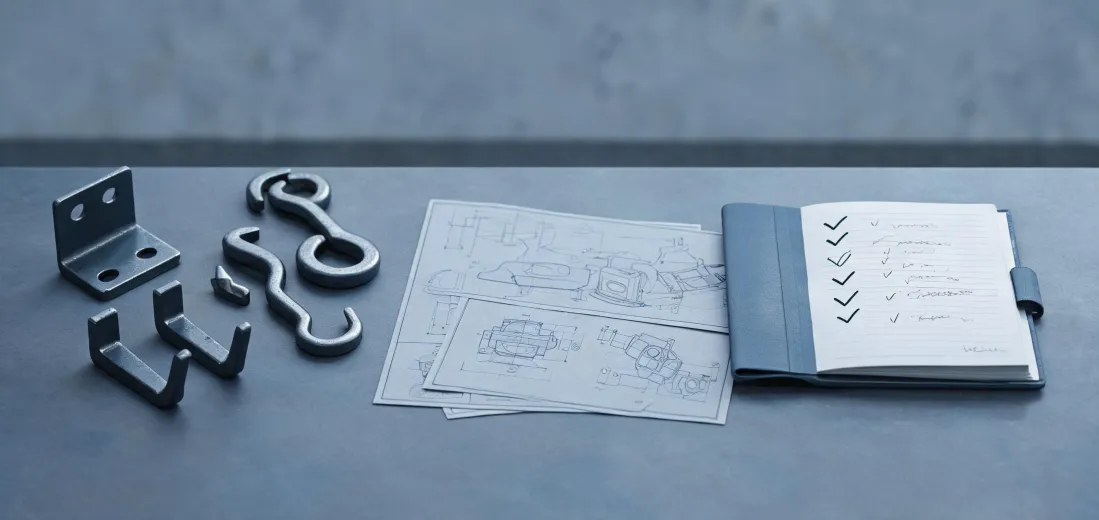
I've been ordering lifting and rigging equipment for maintenance and construction projects for eight years. I've personally made (and documented) 11 significant mistakes that added up to roughly $12,000 in wasted budget. That experience is why our team now uses a pre-order checklist. But before the checklist, I had to learn the hard way that there isn't one universal answer. The right gunnebo shackle depends on your load path, your environment, and your lifting method. The same applies to valves, tools, and even simple tool storage.
One quick note about the search results. If you're looking for the lifting hardware brand, ignore the search hits about Gunnebo House and Gardens. That's a Swedish heritage site, and it's lovely, but it isn't a supplier of crane components. The industrial Gunnebo is a Swedish manufacturer of hooks, shackles, and rigging parts. Order from the industrial one.
Scenario A: Static lashing vs. dynamic lifting
The most common mistake I see is using one type of shackle for everything. A static load, like cargo parked on a trailer, does not stress a shackle the same way a swinging load under a crane does. For static lashing, a screw-pin gunnebo shackle can be enough. For dynamic lifting, use a bolt-type or safety-bolt shackle with a marked WLL (working load limit), and confirm the grade is traceable to a test certificate.
In my first year (2017), I ordered 24 gunnebo shackles for a shipping project. They all looked identical, but six needed a higher WLL than the rest. I skipped the cross-check. The result was $3,200 in redo work and a two-week delay once the crew started checking serial numbers. The lesson is simple: "looks the same" is not the same as "rated the same." For rigging hardware, check the ASME B30.26 marking requirements—stamped grade, size, and WLL need to match the application.
Scenario B: Valve selection follows the same logic
I also order fluid-control components for the same maintenance projects. When you're browsing a butterfly valve catalog, you can't just select a line size and submit the part number. A butterfly valve has multiple form factors: wafer, lug, and flanged. Each one connects to the pipe differently. You need to match the flange standard (ANSI 150/300, DIN PN16, etc.), the body material, the seal material, and the operating torque.
The mistake that stuck with me happened in Q1 2024. I ordered a butterfly valve with the right nominal diameter but the wrong flange class. It didn't fit the existing piping, and the crew only noticed when they tried to install it. That $890 rush order plus a 3-day delay came from trusting one line in a catalog instead of checking the dimensional drawing. Same principle as choosing a shackle: match the specifications, don't guess.
Scenario C: Tools and shop organization
Maintenance crews run into the same trap with tools. A common search query is "what impact driver for lug nuts," and the answer is not "buy the biggest one you can find." In most cases, you want a 1/2-inch drive impact wrench, not a small hex impact driver. For standard automotive lug nuts, a mid-range 1/2-inch impact wrench with adjustable torque is usually enough. For heavy trucks, you may need a high-torque model or even a pneumatic tool. But if you're installing lug nuts, using an impact wrench at full power can easily over-torque the nut and damage the wheel or stud. That's why pros use a torque wrench for final tightening. The counterintuitive advice: pick a tool with the right torque range for the fastener, not the maximum torque on the spec sheet.
What about organizing tools? We used to lose hand tools around the facility until I bought a garden tool caddy. It was a small, boring fix, but it saved us ten minutes per crew per day. A garden tool caddy keeps shovels, pruners, and small parts from disappearing, and it makes workflow noticeably smoother. Efficiency might not sound exciting, but wasted time is wasted budget.
How to tell which scenario you're in
Here's the practical test. If you're only restraining a load during transport, a basic rated shackle will probably do. If you're lifting with a crane, use a certified component with a documented WLL and correct pin type. If you're piping fluids, verify every flange and pressure rating before you order. If you're choosing tools, match the torque range to the fastener and use a torque wrench for final tightening. And if your workspace is chaotic, fix the process gap first—it may be a $40 caddie instead of a $5,000 tool purchase that solves the problem.
Checklists used to sound like bureaucracy to me. After the third costly mistake, I created a simple pre-order checklist with ten lines: application, load path, required standard, rated capacity, part number, photo reference, supplier confirmation, receiving inspection, and sign-off. Over the past 18 months, that checklist has caught 47 potential errors before they became real ones.
Digitalizing that checklist cut our order turnaround from five days to two days, because we no longer stop to recheck every dimension at the last minute. Fewer emergency orders, fewer returns, fewer arguments. That's what I mean by efficiency being a real advantage: it puts money back in the budget and keeps the site moving.