-
1. Separate certified lifting hardware from general workshop tools
-
2. Confirm the WLL, grade, and certificate before comparing prices
-
3. Audit the tooling side in the same order
-
4. Verify the physical markings when the order arrives
-
5. Compare total cost, not unit price
-
What I still forget when I rush
I'm a procurement manager at a 40-person machinery and rigging service company. For six years, I've tracked roughly $180,000 in combined spending on lifting hardware and workshop tooling. I've negotiated with more than 30 industrial distributors, and most of our standard orders use Gunnebo lifting components.
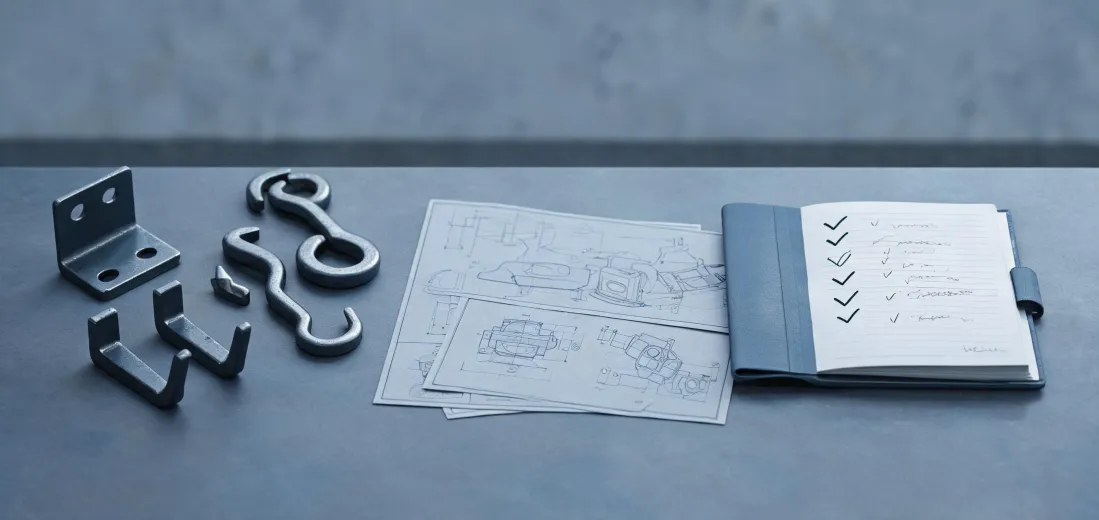
Use this checklist when you're buying lifting hooks, shackles, swivel hooks, container lifting lugs, or the tools your crew will use to install and maintain them. There are five steps. None of them are complicated. The challenge is doing all five when a quote is already overdue.
1. Separate certified lifting hardware from general workshop tools
Start with two lists. The first list is for rated lifting hardware: hooks, shackles, swivels, and container lugs. The second is for everyday tools: pliers, sockets, oil service tools, and impact drivers. It sounds simple, but keeping those lists distinct is the part that prevents an unrated shackle from ending up in a lifting point.
Gunnebo lifting hooks and shackles are our default for the rated list. I appreciate the full range and the documentation that comes with each component. But I still specify carefully, because a hook that is right for one job may be wrong for another.
2. Confirm the WLL, grade, and certificate before comparing prices
I do not compare quotes until I have confirmed the working load limit and material grade. Price is only meaningful after the component spec is clear.
When I request a Gunnebo lifting quote, I include the WLL, hook or shackle type, pin diameter, and certificate requirement in the same document. If the supplier cannot answer those details at quote stage, that tells me something about what the rest of the process will look like.
A marked component without supporting documentation is not automatically bad. Buying it without asking for the paperwork is where the risk starts.
3. Audit the tooling side in the same order
The purchasing error I see most often is not a wrong hook. It is a complete rigging order with an incomplete maintenance kit. A new order is a good moment to check whether your crew can actually install and service what you're buying.
Cobra pliers product info and reviews are worth reading when gripping tools are missing from the cart. The reviews usually mention grip strength and adjustment speed, which are exactly what I care about. I still check the maximum jaw opening against the pin collars and fasteners our team works with. Product reviews do not know what is in your workshop.
For service carts, I also include an oil canister socket set service kit. It looks like a small item in a lifting equipment budget, but it prevents a stopped job when a filter housing or oil canister needs to come off. That kind of delay costs more than the socket set did.
The other question that keeps coming up is: “can a impact driver remove lug nuts?” I hear it from mechanics and I see it in search queries. The practical answer is yes—if the driver has enough torque and the socket is impact-rated. Many 20V impact drivers will break loose light truck lug nuts. But I do not use an impact driver for final torque. Removing is one job. Reinstalling is another.
4. Verify the physical markings when the order arrives
Paperwork matters, but the physical component is the last source of truth. When a Gunnebo lifting order arrives, I check every part number against the purchase order, inspect the WLL mark and manufacturer identifier, and confirm that the certificate actually covers the quantity shipped.
I only believed in checking 100% of a delivery after ignoring it once. Back in 2024, I spot-checked one hook model in a mixed pallet and missed a batch of shackles with the wrong internal reference. We caught the mistake during installation, not receiving. It took 90 minutes to recheck the pallet and correct the stock records.
That experience changed our process. The receiving checklist is now attached to every purchase order. When the order arrives, it takes ten minutes instead of ninety.
5. Compare total cost, not unit price
Unit price is the number that catches the eye, but total cost is the number that hits the budget. I add up freight, handling, documentation, minimum order charges, and any likely expedite fee. I also include the cost of waiting. If a critical lifting component will not arrive until after the installation window closes, saving 4% on the component is not actually a saving.
One distributor can look cheaper on paper and more expensive on the final invoice. That is why I keep past quotes in our procurement folder and review them after the order closes. The main lesson: ask about lead time and exclusions before selecting the vendor, not after.
What I still forget when I rush
If I skip a step, it is usually one of these:
- Reading Cobra pliers product info and reviews without comparing jaw capacity to what we actually grip.
- Adding an oil canister socket set service kit only after a service technician is already waiting for one.
- Answering “can a impact driver remove lug nuts” with a quick yes and forgetting to remind the crew about torque wrenches for reinstallation.
- Assuming one certificate copy covers every model number in a mixed shipment.
A checklist is not about being paranoid. It is about making the same mistake only once. The best part is that the process does not slow down over time; it gets faster, because the questions are already answered before the purchase order goes out.