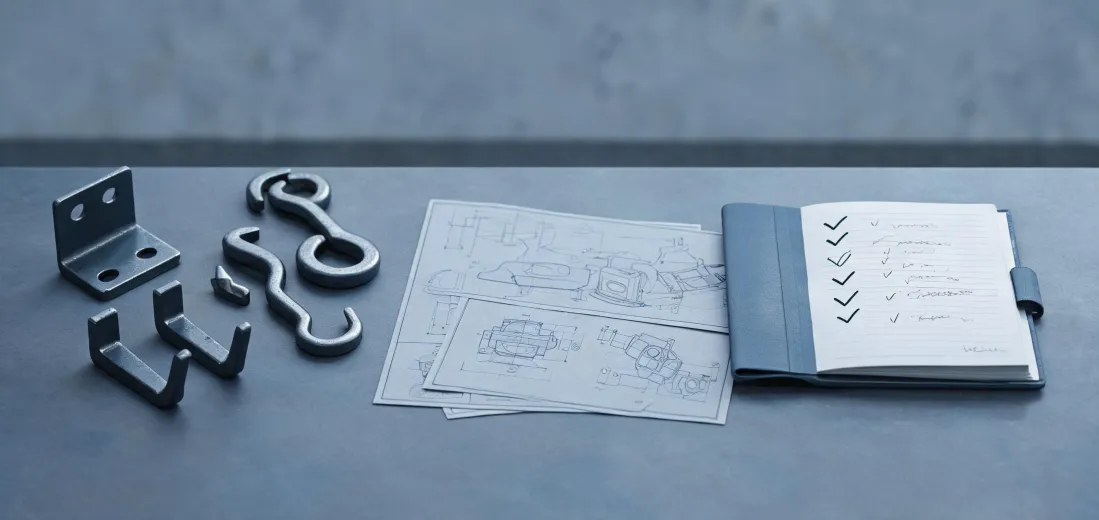
When an industrial client calls with hours left on a deadline, the decision that saves the project is almost never "who ships fastest." It's who can confirm certified, in-stock lifting hardware and crew toolkits in one call — so you place one order, get one tracking number, and stop managing four vendors at 4 pm on a Friday. Everything else is secondary.
I coordinate rush orders at an industrial supply company — mostly for lifting and rigging clients in construction, marine, and logistics. Over the past 7 years I've handled 200+ emergency orders, ranging from a $500 fastener kit to a $42,000 rigging package. The pattern is consistent enough that I can usually tell within five minutes whether a rush order is going to clear or blow up.
When I first started triaging these, I assumed the fastest vendor was the right call. Two air-freight disasters later, I realized speed without certified stock just moves the failure point from the warehouse to the job site.
Why certified in-stock beats fast shipping
Rush orders fail for three reasons, in this order: wrong part number, uncertified substitute, and split shipments. None of them are about shipping speed.
In March 2024, a marine client called at 4:10 pm on a Friday. Their crane upgrade had stalled overnight because a batch of swivel hooks arrived from another supplier with mismatched load ratings — the paperwork said one thing, the stamp on the hook said another. They needed 12 replacement units, mixed sizes, and they needed them certified before a Monday 6 am load-out. Normal lead time on that configuration: 3 weeks.
We had stock because we rotate gunnebo sweden hook models and shackles through two regional warehouses — the Gunnebo lineup covers enough of the standard load range that we keep a working set live at all times. I pulled what I could locally, confirmed the cert docs by 5:30 pm, and had the balance arranged for Saturday morning pickup from the second warehouse. Delivered Sunday night. The client's alternative was eating a $50,000 delay clause with their general contractor.
Even after we confirmed the shipment, I kept second-guessing. What if the cert docs didn't match the physical stamps on the new batch? We didn't relax until the client texted a photo of the load tags Monday morning at 5:40 am.
The detail people forget: the small stuff delays you too
Same Friday call, the crew also needed replacement fastener kits — an impact swivel socket set and a screw driver kit — because their primary kit had walked off site on the previous shift. That's the part of rush orders nobody plans for. Two hundred dollars of hand tools can hold up a $40,000 job if the crew can't torque down what you just shipped them.
We keep basic tool kits lined up next to the rigging hardware for exactly this reason. Not full mechanic sets — the specific items that show up most often in emergency calls: impact-rated swivel sockets for shackle pins, driver kits for control-panel fasteners on lifting equipment, and torque wrenches that match the load-rating chart.
And there's a stranger problem that shows up more often than you'd think: category confusion in procurement systems. Take the question "is a spade a garden tool?" On paper, yes — most catalogs file it under garden and landscaping. But on an earthwork site, a spade is a construction digging tool, and it's stocked and certified differently. I've had a rush order stall for six hours because a buyer typed the wrong category and the inventory system wouldn't surface the matching SKU. Same physical object, different supply chain. When you're hours from a deadline, taxonomy is not a theoretical problem.
What the honest rules look like
After enough of these, our internal rules are pretty simple:
- One supplier with certified in-stock beats three suppliers racing each other.
- Cert docs are confirmed before the order is placed, not after.
- The ancillary toolkit ships in the same box as the lifting hardware — because split shipments are where deadlines die.
- If the load rating isn't on the physical part and in the paperwork, we don't ship it. Ever.
For load-rated components like hooks, shackles, and swivels, this isn't a preference — it's a compliance floor. The relevant standards are ASME B30.26 for rigging hardware and EN 1677 for forged lifting components in the European market (Gunnebo products are designed against EN 1677, which is why the cert paperwork travels with the shipment). A hook without traceable certification isn't a bargain; it's an OSHA 1910.184 liability waiting to be discovered by an inspector.
What was best practice five years ago — call around, take the fastest quote, chase the tracking number — doesn't hold up now. The fundamentals of safety haven't changed. The way competent suppliers execute them has. Inventory visibility is better, regional warehousing is tighter, and the honest ones will tell you in the first call whether they can actually deliver on time.
What this advice isn't
Two honest caveats.
First, the "one qualified supplier" model only works if that supplier actually stocks what you need. If your job requires custom-fabricated lifting gear, a special swivel hook geometry, or offshore-grade DNV certification, there is no rush play — you're on a lead time, and the right move is telling the client that on the first call, not the fourth.
Second, this is workshop-floor advice, not legal advice. If a rush order is sitting on a certified component that changes the load plan or goes outside the rated capacity of an existing system, you need an engineer signing off, not a coordinator clicking "ship." I've turned down two rush orders in the past 18 months because the client wanted to substitute a higher-rated hook in a system that wasn't structurally matched. Cheaper to lose the order than to explain it to a claims adjuster (circa 2025, nothing's changed there).
Bottom line: on a real deadline, the supplier who answers first with certified stock and ships the whole job — hook, shackle, impact swivel socket set, screw driver kit — in one box wins. Everything else sounds faster and costs more.