I'll say it plainly: most rigging 'accidents' are not accidents. They are the predictable result of skipped inspections, under-spec parts, and the belief that 'good enough' is the same as 'safe enough.' In my role coordinating emergency lifting gear for industrial clients, I've watched the same pattern play out for years: a project falls behind, someone decides to save five minutes, and the next phone call I get is about a failed shackle, a dropped container, or a site shutdown.
That's why I've stopped accepting 'we'll deal with it if it happens' as a plan. I've handled 200+ rush orders in four years, and the vast majority had one thing in common: someone skipped the boring check early. Prevention over cure is not a slogan. It's an operational choice.
Most Emergency Requests Are Self-Inflicted
Last quarter alone, we processed 47 rush orders with a 95% on-time delivery rate. The other 5%? Those were the ones where nobody checked the existing supply before the deadline. Every rush order comes with extra freight, extra stress, and extra risk. But the surprising thing is that most of them never needed to be rushed in the first place.
In March 2024, a logistics client called at 11:00 AM needing 12 gunnebo container lifting lugs before the next morning's vessel loading. Normal lead time is three to five days. We found a stock position in Rotterdam, paid roughly €350 in express freight on top of the €1,800 base cost, and got the lugs to the port by 6:00 PM. Good outcome. But it was an unnecessary one. The client had ordered the exact same lugs six weeks earlier. They were in a container behind the site office, untouched, because the site manager never matched the delivery to the purchase order.
Five minutes of verification would have saved that client at least €350 and a full day of anxiety. The cure worked. The prevention would have been cheaper, and I've learned to prefer cheap over dramatic.
The 'Same Spec' Trap
Another pattern I see? Web sling shackles are treated like generic hardware. It's tempting to think any shackle with the same working load limit will do. But identical specs from different manufacturers can behave differently: pin clearance, coating, batch traceability, even the exact steel grade. The gunnebo logo on a swivel hook means something because it marks a forged, traceable component, not a piece of unidentifiable steel. That's not branding. It's the difference between a part you've verified and a part you hope will work.
I still kick myself for a mistake in my first year: I sent a customer a batch of standard shackles when the order required magnetic-particle-tested ones. If I'd checked the paperwork at my own desk, I'd have caught it. Instead, the client's auditor caught it at the gate. The cure cost us the parts, a discount, and express shipping. The prevention would have cost two minutes. I don't make that mistake twice.
What Do All Chain Hoist Use to Lift Heavy Loads? (And Why That's Not Enough)
One of the searches that leads people to our site is 'what do all chain hoist use to lift heavy loads?' The quick answer is: a load chain. Every chain hoist uses a load chain, and manual units use a separate hand chain to operate the mechanism. The gear train multiplies the force, but the load chain is what actually holds the weight.
The better answer is that a chain hoist only works safely when the whole system is verified: load chain, hooks, gear train, brake mechanism. The chain can be the strongest in the world, but if it's stretched, corroded, or fitted to the wrong size sprocket, the mechanical advantage doesn't matter. The chain is the muscle. The inspection is the brain.
It's the same mental habit you'd apply to garden tool parts. If a spring snaps in a hedge trimmer, you don't just buy any spring. You check the size, the tension, the fit. The stakes are higher with a hoist, but the logic is identical: the cheapest part in the world is not cheap if it doesn't fit, and it isn't safe if it's not certified.
What Prevention Looks Like on a Normal Day
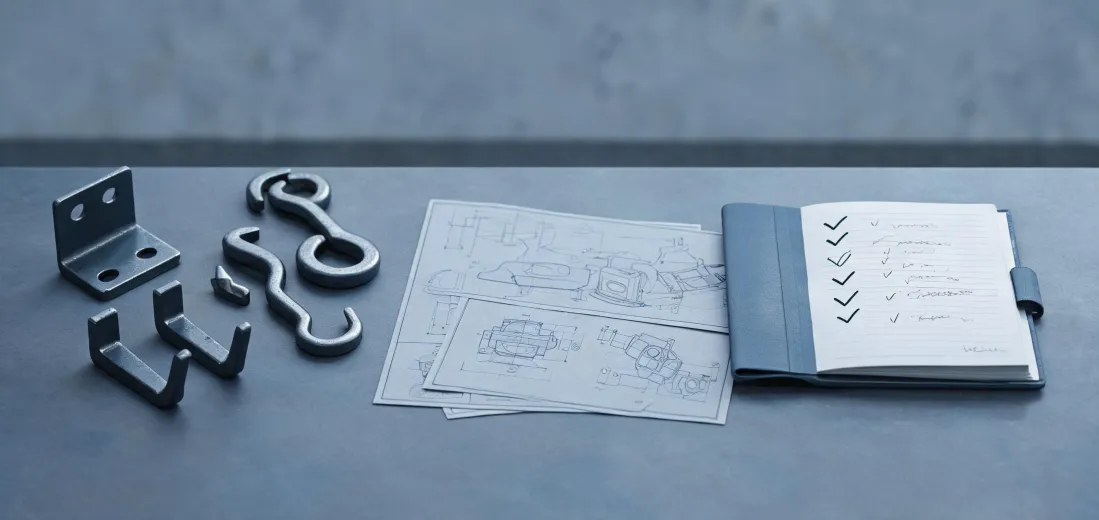
Prevention doesn't mean a forensic audit before every lift. It means building small, consistent checks into your workflow. The 12-point checklist I created after my third mistake is not a novel. It is a sheet with the things that actually get skipped when the pressure rises: grade markings, batch numbers, pin condition, working load limit stamp, and one simple question—does this match the work order?
There are two inspections on every job. The first happens in the office before you order. The second happens at the point of use before you lift. I've seen the first one save more projects than the second, because once the part is on site, your options are limited. A wrong shackle in a warehouse can be exchanged. A wrong shackle at height is a red flag.
And here's what I tell clients who call me in a panic: the difference between a 24-hour fix and a 5-day delay is almost always someone's early check. That's not luck. That's process.
The Standards Are Already on Your Side
This isn't just my opinion. OSHA 1910.184 requires slings to be inspected before each use. ASME B30.9 and B30.16 set the same tone for slings and overhead hoists. The language is not 'when you have time.' It's 'before use.' A pre-use inspection is a legal baseline, not a management suggestion.
The most frustrating part is that these failures aren't new. You'd think written specifications would prevent misunderstandings. They don't—not unless someone actually reads them. The same 12-point checklist that caught my first mistake has saved us an estimated $8,000 in potential rework since then.
Before You Say 'We're Not That Big'
I can only speak to operations like ours: a mid-size supplier with predictable stock and clients in shipping, construction, and energy. If you're a small fabrication shop doing one rigging job a month, your checklist should look different. You might not need a full-time inspector. But you do need a process—even if it's a printed card hanging next to the hoist.
Here's the thing: the process doesn't have to be complicated. For me, it means checking grade markings, batch numbers, pin condition, working load limit stamps, and the question that matters most: is this actually the part that the job calls for? That question has saved me more times than I can count.
So Am I Saying All Rigging Is Dangerous?
No. I'm saying the danger is highest when we act like inspection is optional. It's tempting to think you can compare unit prices and choose the cheapest hook, shackle, or lug. But the cheapest component is only cheap if it's the right component, correctly rated, and correctly maintained.
Bottom line: prevention over cure is not about paranoia. It's about respecting the physics of a suspended load. A gunnebo safety hook or container lifting lug is designed to perform only if it's the right part, correctly inspected, and correctly used. The gunnebo logo doesn't protect you from a bad process. A checklist does.
Take the five minutes. The five days of consequences are more expensive, and you won't get them back.