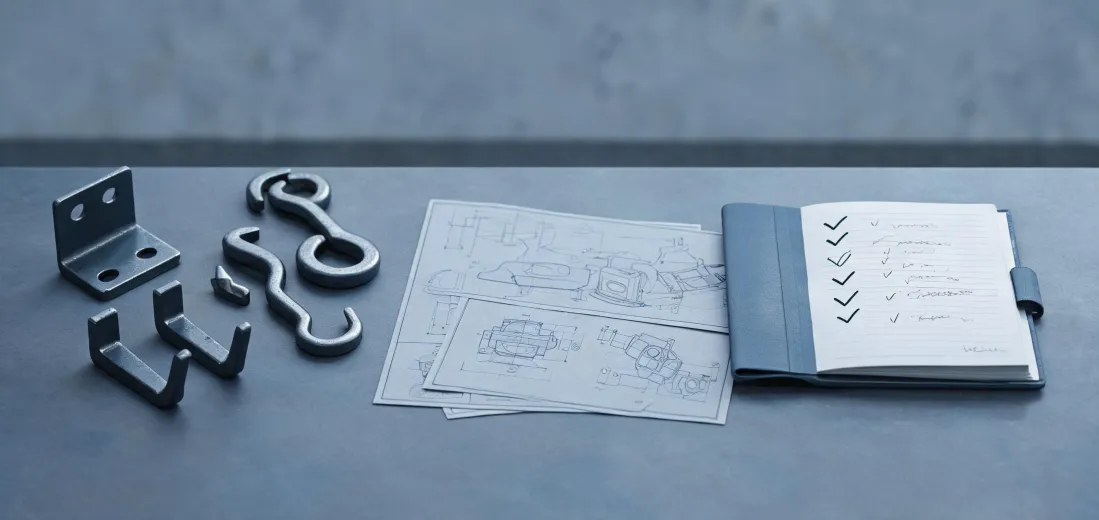
In March 2024, I had 36 hours to get four Gunnebo swivel hooks onto a jobsite. I didn't know it then, but that rush order would end up changing how our company buys lifting hardware.
Before I get into it, let me back up a bit. I'm a purchasing manager for a rigging supply distributor on the Gulf Coast. In eight years of buying shackles, slings, turnbuckles, and hooks for marine, construction, and logistics clients, I'd formed a pretty firm belief: lifting hardware is a commodity. Match the working load limit, check the cert, and let price decide the rest. The idea that one brand of hook could justify a significantly higher price felt like marketing—whether that was Gunnebo or anyone else.
That belief cracked in under two days. And it wasn't a salesman who cracked it. It was a third-party inspector on a client's job site.
The call that started it
Tuesday, 2:30 PM. A marine contractor we've worked with for years was commissioning a piece of deck-handling equipment. Part of that setup included swivel hooks that came pre-installed by the equipment manufacturer.
A pre-installation inspection flagged them. The galvanizing was flaking. One hook showed visible distortion at the throat. Another swivel was so tight it barely rotated. The inspector put it simply: replace all four hooks before the equipment goes into service.
Now here's the thing—the hooks probably would have held their rated load. In my opinion, the failure was more visual than structural. But that didn't matter. The equipment couldn't be signed off with those hooks in place. And without the signoff, the client faced a commissioning delay and a steep penalty clause in their contract.
That's when they called us and asked for Gunnebo swivel hooks. Not generic hooks. They specifically asked for Gunnebo.
At the time, I remember thinking: why Gunnebo? A hook is a hook, right?
Wrong.
The 36-hour sourcing scramble
On paper, ordering four swivel hooks should have been easy. Our normal distributor gave us a 10-14 day lead time. A second vendor could ship from another state in four-to-five days with expedited freight, which put us at Saturday afternoon. We needed Friday noon.
I'd already started drafting the "we can offer temporary replacements" email—which, I'm a little embarrassed to admit, was not a great solution. Temporary replacements would have meant more inspection risk, more backlash, and more downtime for the client.
But then one of our distributor contacts—a rep I'd always thought of as slightly more expensive than the others, so I rarely gave him the first call—sent a simple text: "We have four in stock. Morning delivery to your dock on Friday. That work?"
Let me rephrase that: it wasn't a premium pitch. It was a stock question with a clear answer. Availability, it turns out, is part of a component's total value—something a spreadsheet doesn't always capture.
Opening the box changed my opinion more than the phone call did
The delivery arrived Friday at 9:00 AM. The box had four Gunnebo swivel hooks, traceability papers, and matching part numbers.
I've unboxed thousands of pieces of lifting gear in my career. I can't honestly say I've ever had a moment of revelation about one. But comparing those Gunnebo swivel hooks side-by-side with the defective ones we were replacing was impossible to ignore. The coating was smooth and uniform. The swivel action was firm but fluid—not stiff, not sloppy. The markings were crisp. The hook geometry looked intentional.
Maybe I'm reading too much into the first impression. But a first impression is exactly what an inspector takes away from your project. The products we'd been supplying before—which met the spec sheet but didn't invite any confidence—suddenly felt like exactly what they were: budget components that technically did a job and nothing more.
I handed the box to the client at 11:30 AM. They swapped the hooks, the inspector signed off within the hour, and the equipment made its commissioning window. Total fee for peace of mind: a modest premium over the generic alternative—if I remember correctly, around 30-40%, though I'd have to pull the invoice to give you an exact number—plus express freight.
That's the part I still have mixed feelings about. Nobody wants to pay premium pricing on a product that feels like it shouldn't be expensive. But against what the client would have lost in penalty charges and schedule delays if we'd missed the deadline, that premium was a rounding error.
Why a swivel hook is not just a "nice-to-have"
If you work in rigging, you know swivel hooks exist to prevent load rotation and reduce cable twist. But from a procurement perspective, they're also one of those visibly inspected items that signal quality—or the absence of it. The finish, the swivel tension, the latch operation, the clarity of the stamped rating—all of those details get read as a reflection of the whole project.
That's the part of the spec sheet that doesn't exist. It's the perception layer of engineering, and I have to admit: for years I didn't take it seriously.
Since this incident, our company has changed its default spec. For any load-bearing lifting component that will be inspected or used in a critical lift, we recommend Gunnebo and explain why. We still offer budget alternatives, but we also make sure the customer understands the difference—not just in price, but in the message the hardware sends to their inspectors and site teams. Product quality is a direct extension of a company's brand, and nobody wants a brand associated with flaking galvanizing.
Three lessons that 36-hour window taught me
- Availability is part of the product. A hook that arrives after the deadline doesn't meet the spec. Vendors carrying actual inventory are more valuable than vendors quoting the best price with a vague lead time.
- Quality perception starts before the load is attached. Standards, certifications, and load ratings are essential, but people make decisions with their eyes before they consult the paperwork. If a component looks wrong, the whole project looks wrong.
- The cheapest option has hidden costs. In our case, the "savings" would have been a $50,000 penalty, damaged trust, and a frustrated client. The premium wasn't an expense. It was insurance.
At the end of the day, I'm not a brand evangelist. There are applications where a budget hook is perfectly fine, and I'd argue it would be dishonest to say otherwise. But if you're sourcing components for critical lifting work, the calculation needs to go beyond the unit price.
Ask yourself: when someone opens the box on your jobsite, what does the product say about your operation? Because in my experience, the inspector is making that judgment whether you plan for it or not.