-
Step 1: Calculate Total Cost Before You Look at Unit Price
-
Step 2: Verify Certifications and Spec Sheets — Not Just the Price
-
Step 3: Check Compatibility With What You Already Own
-
Step 4: Match the Tool to the Actual Job, Not the Spec Sheet Fantasy
-
Step 5: Buy From Sources That Document What They Ship
-
Step 6: Watch for "Great Deals" on Bundled Tool Sets
-
Step 7: Build a Pre-Order Checklist and Actually Use It
-
Common Mistakes That Still Happen (Even With the List)
I've been handling industrial equipment orders for 8 years. I've personally made (and documented) six significant mistakes, totaling roughly $47,000 in wasted budget. Now I maintain our team's checklist to prevent others from repeating my errors.
This is that checklist. Seven steps. If you're the person who places orders for lifting hardware, power tools, or anything else that shows up on a loading dock, it's for you. Read it once, then steal it for your own team.
Step 1: Calculate Total Cost Before You Look at Unit Price
When I first started managing vendor relationships, I assumed the lowest quote was always the best choice. Three budget overruns later, I learned about total cost of ownership.
The $500 quote turned into $800 after shipping, setup, and revision fees. The $650 all-inclusive quote was actually cheaper. That was 2019. I still cringe.
Here's what goes into TCO, at minimum:
- Unit price × quantity
- Freight, customs, and handling
- Certification or testing fees (matters a lot for lifting gear)
- Lead time cost — what does a 3-week delay actually cost your project?
- Replacement or rework risk
If a vendor quote doesn't list a number, call and get it in writing. "We'll sort it out later" is how $200 surprises happen.
Step 2: Verify Certifications and Spec Sheets — Not Just the Price
I once ordered a batch of shackles from a "trusted" reseller because they were 15% cheaper. The paperwork didn't include the material traceability certs our site required. We couldn't use them. $2,100 of hardware, straight into a storage bin we still haven't cleaned out.
For lifting and rigging components — gunnebo shackle lines, for example — always confirm:
- Manufacturer name and part number
- Working load limit, not just breaking strength
- Certification standard (EN 13889, ASME B30.26, etc.)
- Traceability paperwork availability
Pull the spec from the manufacturer's own documentation. If you're sourcing from a catalog, go straight to the source — the gunnebo catalog shows exact part numbers and load ratings for each hook, shackle, and swivel. Don't trust a reseller's summary PDF.
Step 3: Check Compatibility With What You Already Own
We both said "standard size" but meant different things. Discovered this when the order arrived and nothing fit our existing materials.
Compatibility issues I've personally hit:
- Shackle pin diameter vs. existing eye bolt — off by 2mm, whole order useless
- Battery platform mismatch on cordless tools — bought a 20V MAX 1/2 in. hammer drill kit DCD798P1 for a crew that only carries a different brand's batteries
- Thread pitch on a swivel hook that didn't match our lifting beams
Before every order: write down the exact specs of the equipment it needs to connect to. Not "about this size." The number.
Step 4: Match the Tool to the Actual Job, Not the Spec Sheet Fantasy
People ask me "which impact wrench is best for lug nuts" and expect one answer. It depends. Are you running a shop with 50 trucks a day or changing tires on your own trailer twice a year?
For lug nuts specifically, I learned this the hard way:
- ½ in. drive impact wrench with at least 300 ft-lbs of torque — this is the floor, not the ceiling
- Pin detent vs. friction ring matters more than people think — pin detent for frequent socket changes
- Weight becomes a real issue after an hour of use
I bought a "high torque" unit that was theoretically spec'd fine. It was 9 pounds. Nobody wanted to use it. So it sat in a drawer while the crew fought with a smaller one. That's not a tool purchase, that's a $300 mistake with a carrying case.
Step 5: Buy From Sources That Document What They Ship
We didn't have a formal vendor approval process for small orders. Cost us when a batch of rigging components showed up with photocopied certs and no lot numbers. Three days of back-and-forth to figure out whether they were legit. They weren't.
Now every new vendor gets run through this filter:
- Do they publish full spec sheets or just marketing blurbs?
- Is there a real catalog with part numbers (not "call for pricing")?
- Do their shipments arrive with traceable lot numbers?
- Can you call someone and get a straight answer in under 10 minutes?
If a vendor fails two of these, they don't make the list. It doesn't matter how good the price is.
Step 6: Watch for "Great Deals" on Bundled Tool Sets
A 3-piece set at a 40% discount feels good. Until you realize you're paying for two tools you'll never touch. I bought an ergo garden tool set 3-piece for a facility landscaping project two years ago because it was bundled cheaply. Used one piece. The other two are still in the box.
Bundles almost always include a loss-leader item padded with filler. Ask yourself before buying:
- Would I buy each piece individually at this price?
- Do I need all three, or am I paying extra for storage and packaging?
- Is there a "starter" version that's a stripped-down tool hiding behind a nice case?
If the answer to the first question is no, just buy the one piece you actually need.
Step 7: Build a Pre-Order Checklist and Actually Use It
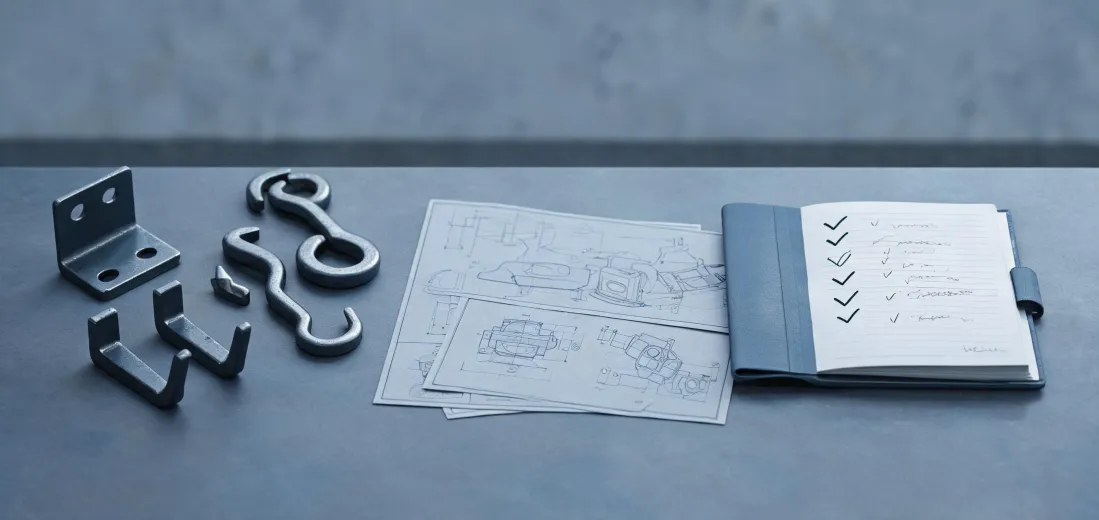
The third time we ordered the wrong quantity (yes, third), I finally created a verification checklist. Should have done it after the first time. Here's what's on ours:
- Part numbers verified against manufacturer source
- Load rating / torque spec written on the PO
- Compatibility dimensions confirmed with site lead
- Delivery date agreed with project schedule
- Certifications required by site, listed and confirmed available
- Return policy and restocking fee reviewed
We've caught 47 potential errors using this checklist in the past 18 months. Most were small — wrong thread size, missing cert, delivery date off by a week. But three of those would've been $1,000+ problems. The checklist paid for itself roughly 6 times over.
Common Mistakes That Still Happen (Even With the List)
Here's the thing: a checklist doesn't fix everything. People skip steps. I still skip steps. The three most common ones I see:
- Assuming the supplier knows your application. They don't. A generic lifting hook isn't "close enough" to a rated swivel hook. Ever.
- Ordering to hit a PO number instead of a real need. End-of-quarter panic buying creates spare parts graveyards.
- Not reviewing the invoice against the quote. I've caught three freight markups this year alone. No one tells you about those.
Look, no checklist makes you bulletproof. But it makes you harder to fool — including by yourself. That's the whole point.
Start with Step 1 and Step 7 if you're building this for a team. TCO math and the pre-order list catch the most expensive mistakes.