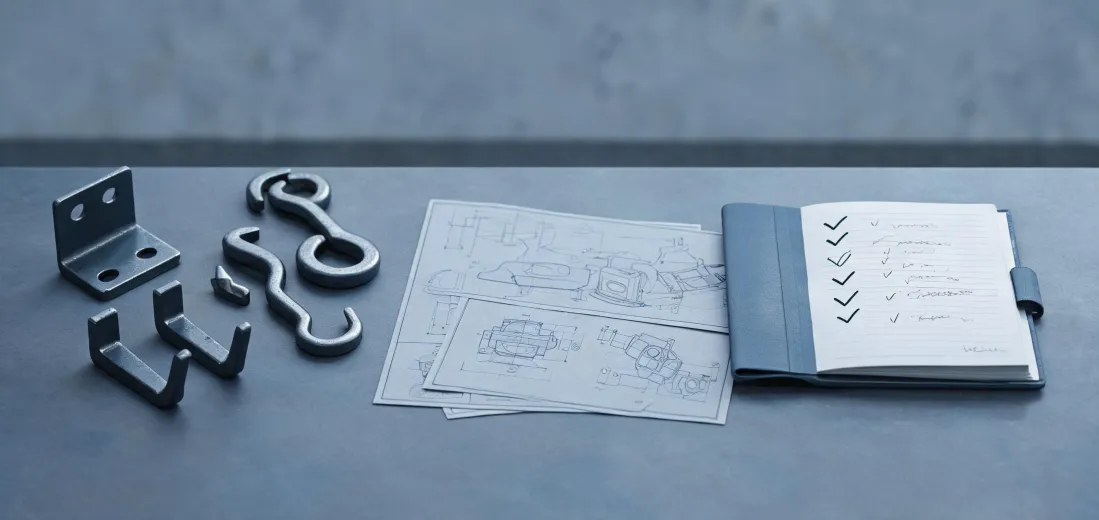
The Surface Problem: “It’s Just a Lead-Time Issue”
In March 2024, a dock repair client called at 6:40 a.m. They needed rigging hardware and a few power tools on site in 36 hours. Normal turnaround was 5–7 business days. They said, “Can you just expedite it?”
That’s the surface problem. Everyone thinks the issue is speed. In my role coordinating rush orders for an industrial distributor, I’ve handled 300+ emergency orders in 6 years. I can tell you: speed is rarely the real bottleneck. The real bottleneck is a mismatch that nobody caught until the crate was open.
The Deeper Reason: You’re Comparing Unit Prices, Not Fit
I said “standard swivel hook.” They heard “any swivel hook.” Result: the pin diameter didn’t match their shackle, and we lost six hours sourcing a replacement. That’s a communication failure, sure. But it’s also a procurement failure. The quote looked simple. The specification wasn’t.
When you’re buying lifting hardware, the gunnebo swivel hook isn’t just a hook. It has a rated load, a specific opening dimension, a pin size, a material cert, and a traceability number. If you don’t check those against your existing shackles and master links, you’re not buying a hook. You’re buying a delay.
This is where the gunnebo catalog matters. Not because a catalog is magic, but because a complete, current catalog forces you to compare apples to apples. I’ve seen buyers pull a part number from a 2019 PDF and order it in 2025. The dimensions changed. The standard changed. The cert changed. The order arrived. Nothing fit.
The same pattern shows up with tools. Someone asks for an m18 fuel 20" dual battery chainsaw kit because it’s on sale. But if the crew needs it for storm cleanup on a marine site, the battery platform, chain gauge, and bar length matter more than the discount. Someone orders a brute turbo breaker hammer kit bh2770vcd without checking the hex shank or required air volume. It shows up. It doesn’t run the attachments they have. Back to square one.
And then there’s the classic: what size air impact wrench for lug nuts? The answer isn’t “the biggest one.” It’s drive size, torque range, socket size, and air supply. A 1/2-inch drive might be perfect for light truck lugs. A 3/4-inch or 1-inch drive might be required for heavy equipment. Get it wrong and you either can’t break the torque or you snap a stud. Both cost time.
The Cost of Getting It Wrong: It’s Not the Rush Fee
Here’s the part that rarely makes it into the quote. Total cost of ownership (TCO) includes the unit price, yes. But it also includes freight, rush fees, reorder costs, downtime, labor, and the risk of an unsafe workaround.
To be fair, budgets are real. I get why people go with the cheapest quote. But the cheapest quote often ignores the expensive parts. A $500 rigging order can turn into an $800 problem after overnight freight, a $150 reorder, and six hours of crew downtime. The $650 quote that includes the right gunnebo swivel hook, the correct certs, and a verified stock count is actually cheaper.
I’m not 100% sure of today’s freight rates, but in January 2025, rush air freight on a small rigging order often added 30–50% to the base cost. That’s before you factor in the cost of a missed deadline. For one marine client, missing a 48-hour window would have triggered a $50,000 penalty clause. We paid extra for expedited freight and still saved the project.
Safety is another cost. Per OSHA 29 CFR 1910.184 and ASME B30.26, rigging hardware must be marked with working load limits and inspected before use. If you’re rushing and you grab a hook without a readable mark or a valid cert, you’re not saving money. You’re borrowing risk.
Never expected the higher-priced option to be the cheaper path. Turns out the gunnebo catalog part arrived with the right certs, the right dimensions, and zero rework. The “budget” option had already cost us two days on a previous job.
The Fix: Three Checks Before You Expedite Anything
After enough failed rush orders, we implemented a simple policy. It’s not glamorous, but it works.
- Build a TCO line item for every rush quote. Add freight, rush fee, reorder probability, downtime estimate, and safety review. If the cheap quote needs a reorder, it’s not cheap.
- Verify the spec against a current catalog. For lifting hardware, use the gunnebo catalog to confirm the gunnebo swivel hook rating, pin size, and cert. Don’t trust an old screenshot. Call and confirm stock and dimensions.
- Match the tool to the job, not the sale tag. For the m18 fuel 20" dual battery chainsaw kit, confirm battery platform and bar length. For the brute turbo breaker hammer kit bh2770vcd, confirm air consumption and shank type. For the what size air impact wrench for lug nuts question, check torque and drive size before you buy.
In my opinion, the best procurement teams aren’t the ones who negotiate the lowest unit price. They’re the ones who ask the boring questions early. “What’s the pin diameter?” “What’s the torque spec?” “Does it come with a cert?” Those questions feel slow. They’re actually fast.
There’s something satisfying about a rush order that arrives correct. After all the stress and coordination, seeing the crate open and the parts fit—that’s the payoff. And it only happens when you treat total cost, not unit price, as the real number.