The first time the operations crew asked me to order lifting shackles, I made a mistake that cost us about $1,200 and a good chunk of my credibility. It happened in April 2025, and I still think about it whenever a vendor quote looks too good to be true. If you've ever typed "how long is an anchor shackle" into a search bar and hoped for the best, this one's for you.
I'm not a rigging engineer, so I can't speak to load calculations or sling angles. What I can tell you from a purchasing perspective is how to verify what you're actually buying—and why it matters long before the invoice gets paid.
How I ended up ordering rigging hardware
I've handled purchasing for a 60-person marine maintenance company since 2020. I manage all operations supply ordering—roughly $400,000 annually across 8 vendors—and I report to both operations and finance. That means I know a little about a lot: PPE, shop supplies, tooling, and, on a bad day, lifting hardware for the deck crew.
When we took on a new contract early in 2025, the crew leader asked me to replace rigging that had failed inspection. His words were:
"Just get decent ones. I don't want anything from the bargain bin."
I had a problem. I didn't know how to spec a shackle. So I did what most people do: I searched the internet. Which is how I ended up asking Google, "how long is an anchor shackle?"
Looking back, that was the first red flag I ignored.
The wrong question
Here's something the search results won't tell you: the physical length of an anchor shackle isn't the spec you need. A shackle's nominal size refers to the diameter of its pin—1/2", 5/8", 7/8"—not its overall length. Overall length, throat opening, and bow width are secondary dimensions defined by the standard it's made to.
And "anchor shackle" is a category, not a single part. An anchor shackle has a rounded bow and a threaded pin. A chain shackle has a narrower bow. Depending on whether you're looking at EN 13889, ASME B30.26, or ISO 2415, the same nominal size can have different dimensions and different working load limits.
I knew maybe 10% of that at the time. I had actually spent an hour in the gunnebo catalog, which is publicly available and lists every dimension, WLL, and standard reference clearly. The catalog wasn't the problem.
The problem was that I read it, understood just enough, and then overruled it with a spreadsheet.
The decision that looked smart
I found a supplier offering shackles at about 35% less than the Gunnebo equivalents. Same nominal size. Same general shape. The listing said "for lifting applications," which, in hindsight, meant nothing at all. I told myself I was being a responsible buyer by questioning a premium brand's markup.
The math looked fine on paper. 12 anchor shackles and 8 safety hooks, saving about $180 on the order. I could report that to finance and look good. I applied the same logic to a tool box kit for the workshop around the same time. The lead technician had asked for a specific brand of medium duty swivel casters. I bought a cheaper set for about half the price and saved another $90. It felt like good purchasing.
It wasn't.
The twist
The tool box casters arrived first. They went on the kit and made it through exactly one shift before one of the swivels started sticking. Within a week, two more wheels had flat spots, and the box couldn't be moved without dragging. I had to reorder the casters the tech originally wanted, plus pay rush shipping because the workshop schedule depended on that box. The $90 I "saved" turned into about $260 in replacement parts and freight—way more than the casters ever cost in the first place.
I still didn't connect that to the shackle order. The shackles came in and they looked... fine. Shiny, heavy, exactly like the product photo. I signed for them, sent them to the crew, and moved on.
Two weeks later, the crew leader walked into my office and put one of those shackles on my desk. The batch had failed inspection. The pins didn't fit the mating components properly, and the certification paperwork wasn't traceable to any recognized standard. The inspector had flagged the working load limit markings as unverifiable. We couldn't legally use them on a live job site.
I'll never forget how he said it:
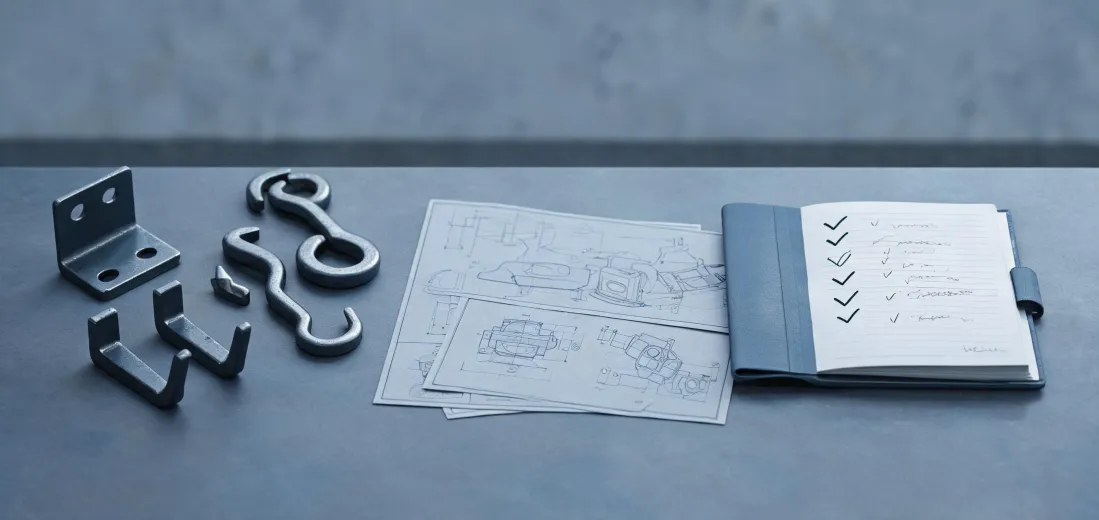
"These aren't lifting shackles. They're metal shapes with holes in them."
For the record, this gets into metallurgy territory that isn't my expertise. A materials engineer could tell you exactly what was wrong with the steel. From my side of the desk, the problem was simpler: I bought a component that looked like a shackle, but carried no verifiable guarantee that it would do what a shackle does.
The result
We had to reorder the correct hardware from the gunnebo lifting range. That meant a second round of shipping, a rush fee, and a two-day delay on the contract. When I added it all up, my original "savings" cost us about $1,200—roughly six times the $180 I'd tried to save.
That number doesn't include the softer costs. The crew didn't trust my buying decisions for a while, which was fair. The finance manager sent a polite but pointed email asking if we could "formalize how we verify suppliers for safety-critical components."
If you've ever received an email like that, you know exactly how it feels.
What the gunnebo catalog taught me
After the dust settled, I spent an afternoon actually reading the gunnebo catalog page by page. Not because Gunnebo is the only manufacturer that makes certified rigging hardware—it isn't. But because a real catalog shows you what a properly specified component looks like. It gives you:
- The standard the product is made to (EN 13889 for forged shackles, for example)
- A working load limit (WLL), not a vague "strong enough"
- Dimensional data you can verify against your application
- Traceable part numbers, so you can order the exact same thing twice
That last point mattered more than I expected. When we reordered, I used the part numbers straight from the gunnebo lifting catalog. The right parts arrived, passed inspection, and the work moved forward. For the first time in that whole mess, the process actually felt calm.
As of April 2026, that catalog is still the first reference I check when the crew asks for lifting hardware.
Something else it made me realize: a WLL is not a breaking limit. It's deliberately set below the break point, usually by a clear safety factor defined in the standard. I don't do load calculations—that's the engineer's job. But I now check that a WLL is actually marked and documented. If it isn't, that's another red flag.
The real lesson
I process 60–80 orders a year, and I've learned the hard way that the lowest quote has cost us more in the majority of cases where I chased it. I don't have a polished spreadsheet to prove that; once you count reorders, downtime, and the hours people spend rescheduling, nobody tracks it cleanly. But I'd bet on it.
In my opinion, the value of a certified component isn't the price. It's the certainty. You know what you're getting, you can prove it on paper, and you don't have to lie awake wondering whether a load will drop because the shackle was "probably fine." You can't always put a dollar figure on that certainty, but eventually you pay for its absence.
So if you're searching "how long is an anchor shackle," stop and ask the better question: what's the pin diameter, what's the working load limit, and what standard is it certified to? The length is just a dimension. The certification is what stops it from being a metal shape with a hole in it.
And yes—we ended up with the brand-name medium duty swivel casters. They've been rolling fine since May 2025. It turns out the first set was rated barely above what the loaded tool box weighed, which is why the wheels deformed. The better casters had enough headroom to do the job. Same logic, different hardware.
Bottom line: value over price isn't a slogan. It's a way of counting the costs that don't show up on the purchase order. I still compare unit prices every day. But I do not treat a photo and a low price as a specification. Now I compare what comes with them—and if a vendor can't show me traceable certification, the price stops meaning anything.